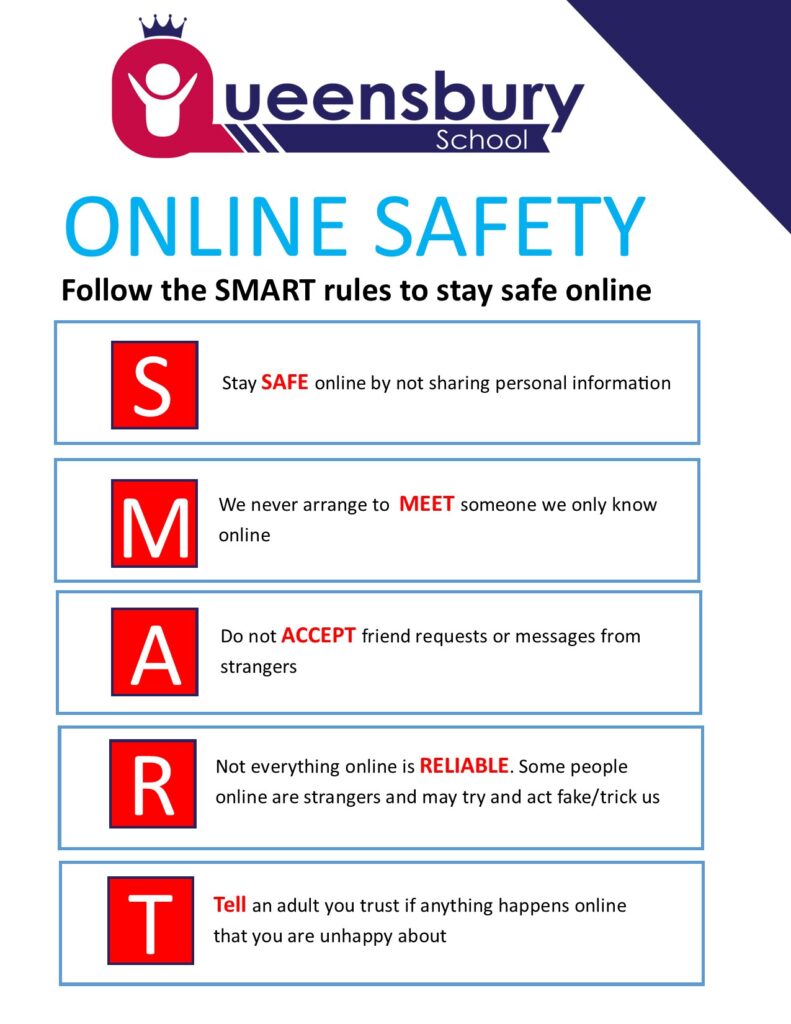
Online safety is taught as part of our Personal Development, and ICT curriculum and is reinforced through assemblies, themed events (such as Safer Internet Day), and day‑to‑day teaching and pastoral conversations. We take a supportive, accessible, and practical approach, recognising that our pupils may need additional guidance, repetition, and visual support to stay safe online.
How We Teach Online Safety in School
We help pupils to:
Understand how to stay safe when using the internet, social media, games, and apps.
Know how to recognise unsafe or worrying online behaviour (including bullying, scams, or inappropriate contact).
Be able to report concerns to a trusted adult, both in school and online.
Artificial Intelligence (AI) and Online Safety
AI tools are becoming more common in everyday technology. At [School Name], pupils may encounter AI under staff supervision only.
We teach pupils that:
· AI is not a real person and should not be treated as a friend or support service.
· Personal information must never be shared with AI tools.
· AI should not be used for advice about feelings or personal problems.
· Anything worrying seen online should be shared with a trusted adult.
We encourage parents and carers to talk with their children about AI use at home and reinforce these safety messages.
Further guidance for families:
NSPCC – Talking to Children About AI
How Parents and Carers Can Help at Home
Parents and carers play a vital role in helping young people stay safe online. Simple steps can make a big difference:
Talk regularly with your child about what they do online.
Encourage them to tell a trusted adult if something online worries them.
Set clear routines around screen time and device use.
Use parental controls and privacy settings on devices and apps.
Reinforce that it is never their fault if something goes wrong online.
What to Do if You Are Worried
If you have concerns about your child’s online safety:
Contact the school and ask to speak to any (DSL) Designated Safeguarding Lead.
Use one of the trusted reporting and advice services listed below.
Trusted Online Safety Support and Advice
For Parents and Carers
NSPCC – Online Safety & SEND Support
Practical advice, activities, and guidance for families of children with SEND